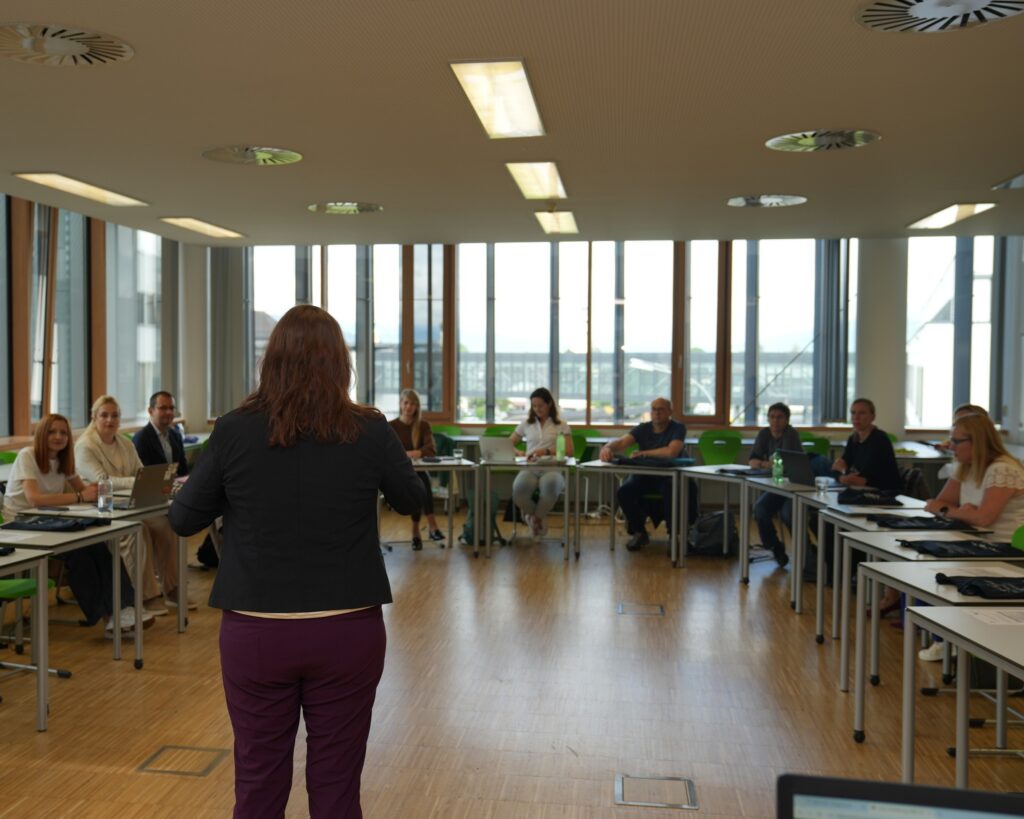
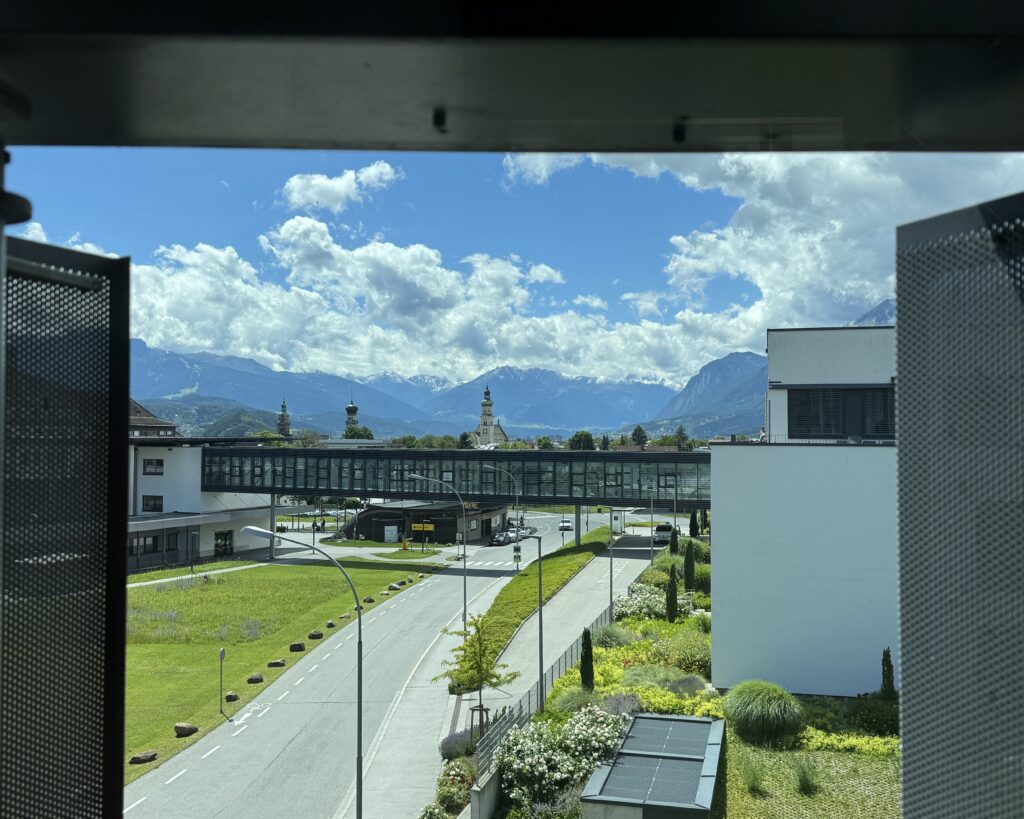
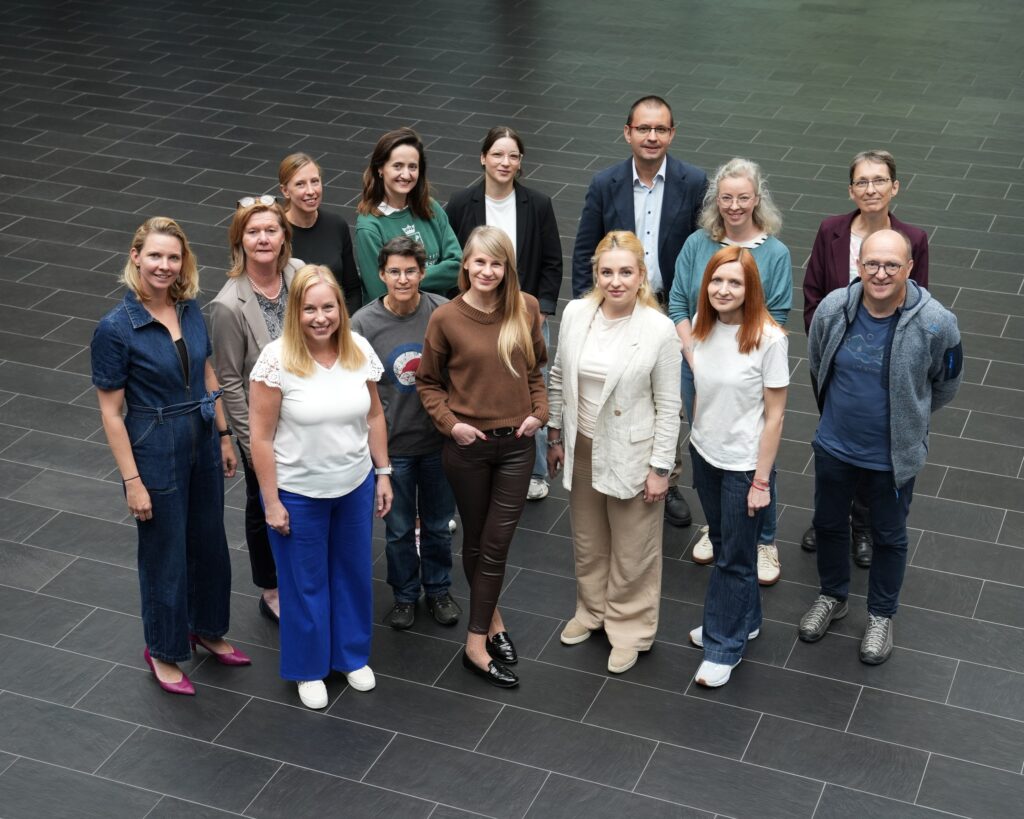
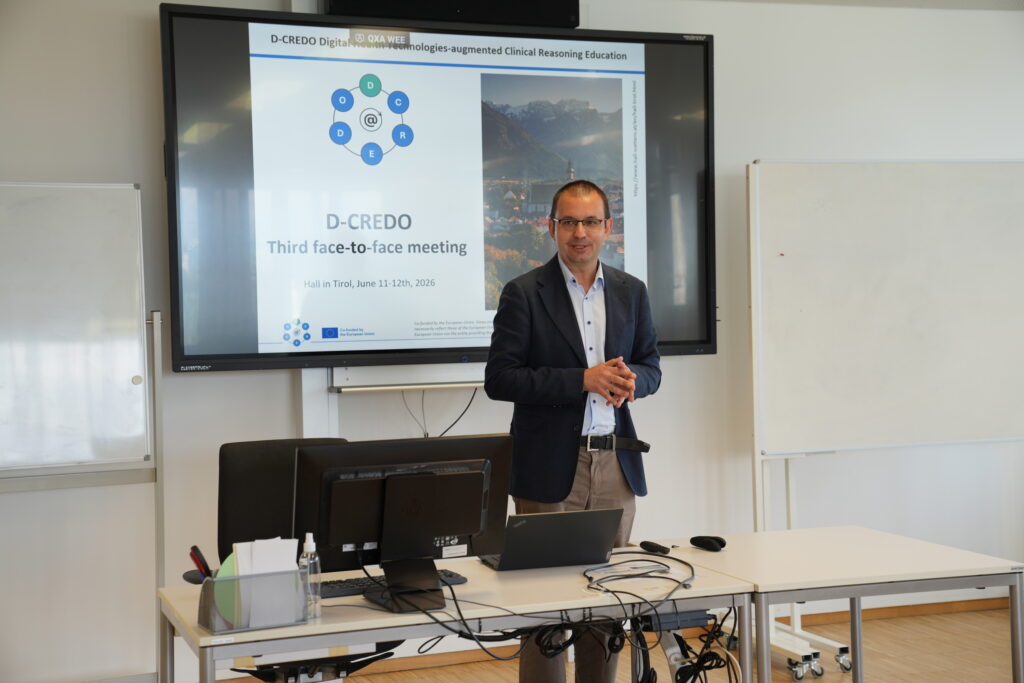
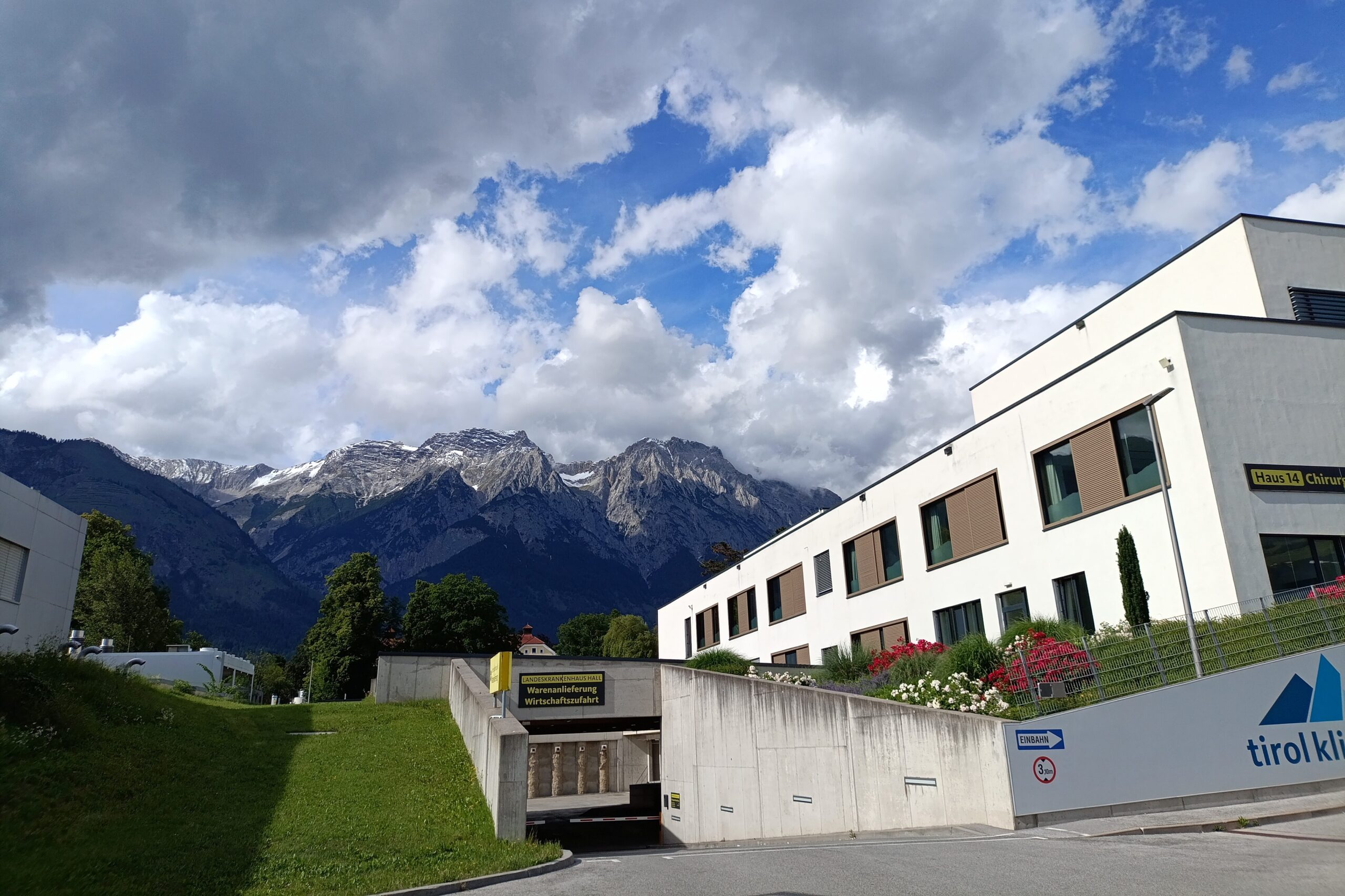
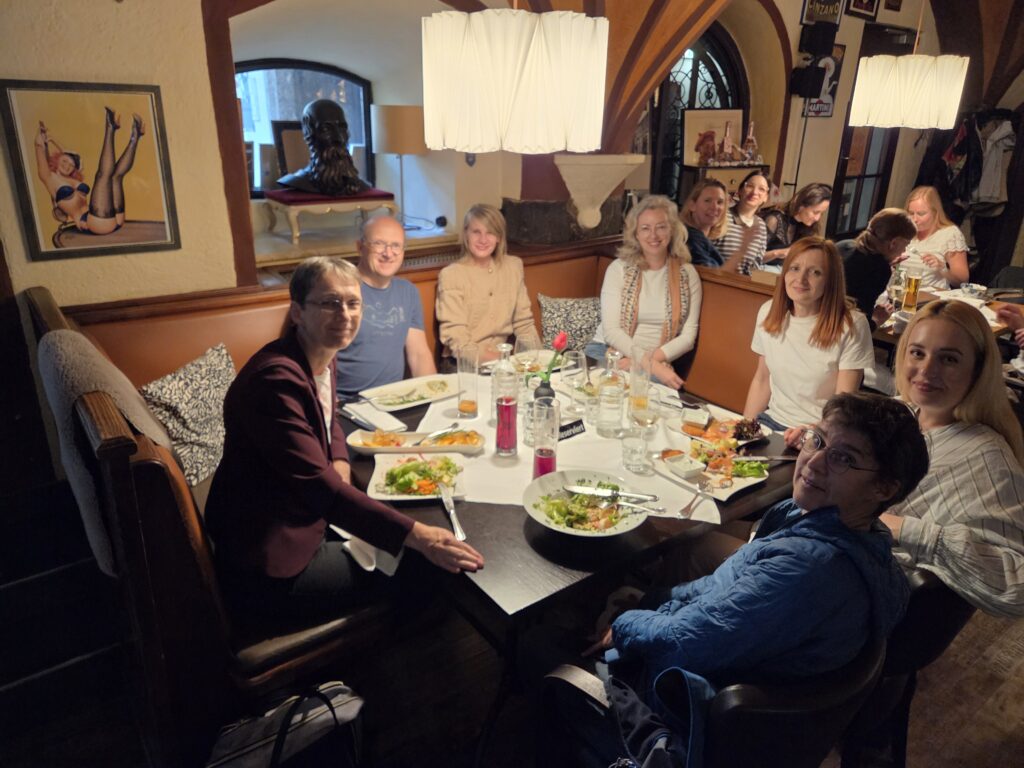
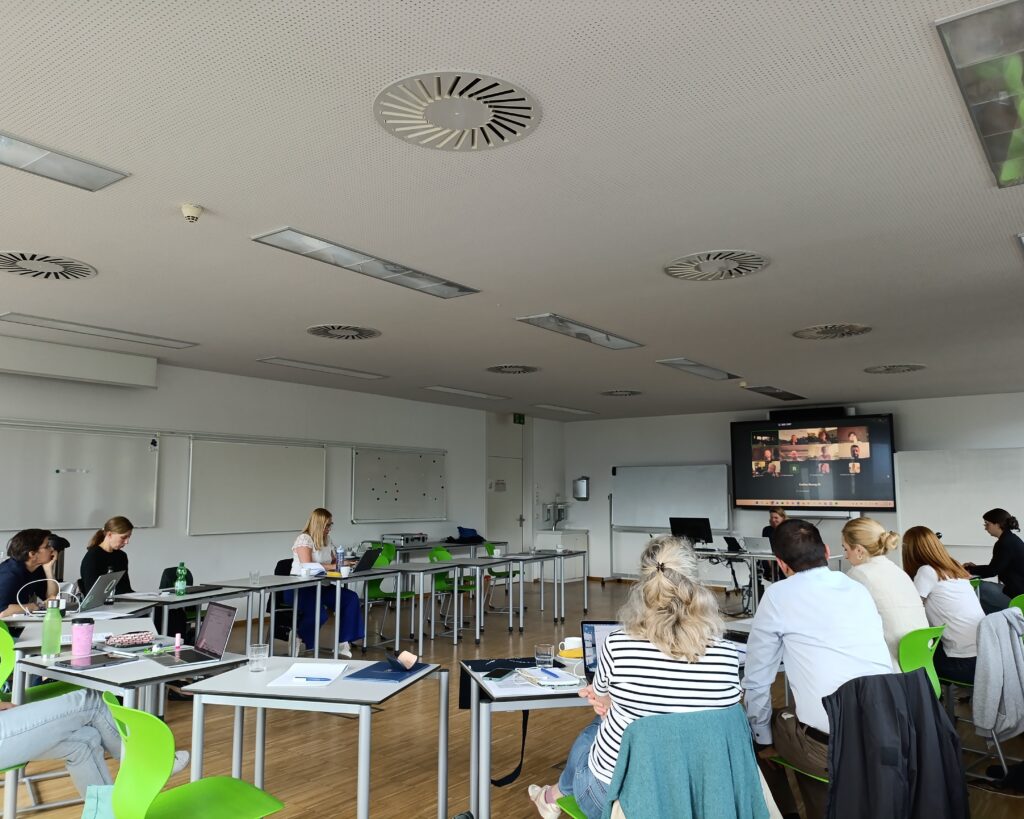
On June 11–12, 2026, the D-CREDO consortium gathered in Hall in Tirol, Austria, for its third face-to-face meeting, hosted by UMIT TIROL. Surrounded by the impressive Tyrolean mountains, all partners came together to review progress, tackle remaining challenges, and prepare for the final year of the project. The meeting opened with a welcome and a brief introduction to the university from UMIT Rector Margit Raich, followed by a reflection on D-CREDO’s achievements during its second year by our project lead, Andrzej Kononowicz. With many key deliverables now completed, discussions focused less on planning and more on implementation, evaluation, and long-term sustainability.
DAY ONE
WP3: Bringing Learning Units to Life
The first session of the meeting was dedicated to Work Package 3, where the consortium reviewed progress on the development of student and teacher training learning units. Over the past months, the team has worked on turning the educational concepts into fully developed learning experiences within Moodle and CASUS. The learning units now include a combination of asynchronous and synchronous activities, virtual patient cases, quizzes, assignments, and educator resources designed to support implementation in local curricula.
Several learning units have already completed the review process and are being implemented, while others are approaching their final stages. Discussions focused on ensuring quality, managing revisions, and preparing materials for upcoming pilot studies. A recurring theme was the importance of keeping development practical and sustainable. Attention is shifting toward collecting feedback, managing updates efficiently, and supporting educators who will use the materials for the first time. The consortium also discussed translation processes and local adaptation, recognising that successful implementation requires balancing consistency across institutions with the flexibility needed to fit different educational contexts.
Nursing and Clinical Reasoning
The next session of the meeting centred on the role of nursing within D-CREDO and how digital clinical reasoning education can better reflect nursing practice. Two invited experts from UMIT introduced ongoing work in nursing informatics and digital literacy. These presentations sparked a lively discussion.
Participants highlighted that digital transformation affects all healthcare professions, but not always in the same way. Nursing brings unique perspectives on patient-centred care, care coordination, and continuous clinical assessment. Ensuring these perspectives are represented within D-CREDO remains an important goal as the project moves forward.
The discussion also raised the possibility of involving students more directly in future project activities, helping us better understand their needs, expectations, and experiences with digital tools.
WP4: Preparing for Pilot Studies
As D-CREDO enters a crucial implementation phase, Work Package 4 focused on pilot evaluations and data collection. The consortium reviewed the evaluation protocols that will be used across partner institutions and confirmed timelines for upcoming pilot studies. These pilots will provide valuable evidence about how the learning units perform in real educational settings.
Partners also discussed the final evaluation questionnaire, learning analytics plans, and research questions that will guide future analyses. Among the questions receiving particular attention were:
- When is the best moment to introduce digital tools in clinical reasoning education without overloading learners?
- How can educators be effectively prepared to teach with digital technologies?
The discussion highlighted the project’s growing shift from development toward evidence generation. The coming year will provide important insights into how digital tools can support clinical reasoning education in practice.
WP5: Research, AI, and Future Collaboration
The research session brought together project partners and associated partners to explore emerging topics in digital health education.
Presentations addressed:
- Bias in healthcare AI and its implications for patient empowerment.
- The use of conversational agents to support learning in trauma care.
- AI-generated feedback for clinical reasoning education.
Although the topics varied, a common thread emerged: the need to critically evaluate the opportunities and limitations of AI in healthcare education. Rather than viewing AI as a solution in itself, discussions focused on how educators can use these technologies thoughtfully to support learning and professional development.
The consortium also confirmed plans for a future research-focused meeting with associated partners in early 2027.
DAY TWO
WP2: Developing Best Practice Guidelines
The second day began with a workshop dedicated to the development of D-CREDO’s Best Practice Guidelines.
Working in mixed groups, participants reflected on local curriculum contexts, previous experiences, and common implementation challenges. Several themes emerged repeatedly:
- Overloaded curricula
- Resistance to educational change
- Limited faculty capacity
- Differences in AI literacy among educators
- Sustainability and integration with local systems
These discussions will form the foundation of a set of practical recommendations designed to help institutions adopt digital clinical reasoning education more effectively.
Looking Beyond the Project: Sustainability Matters
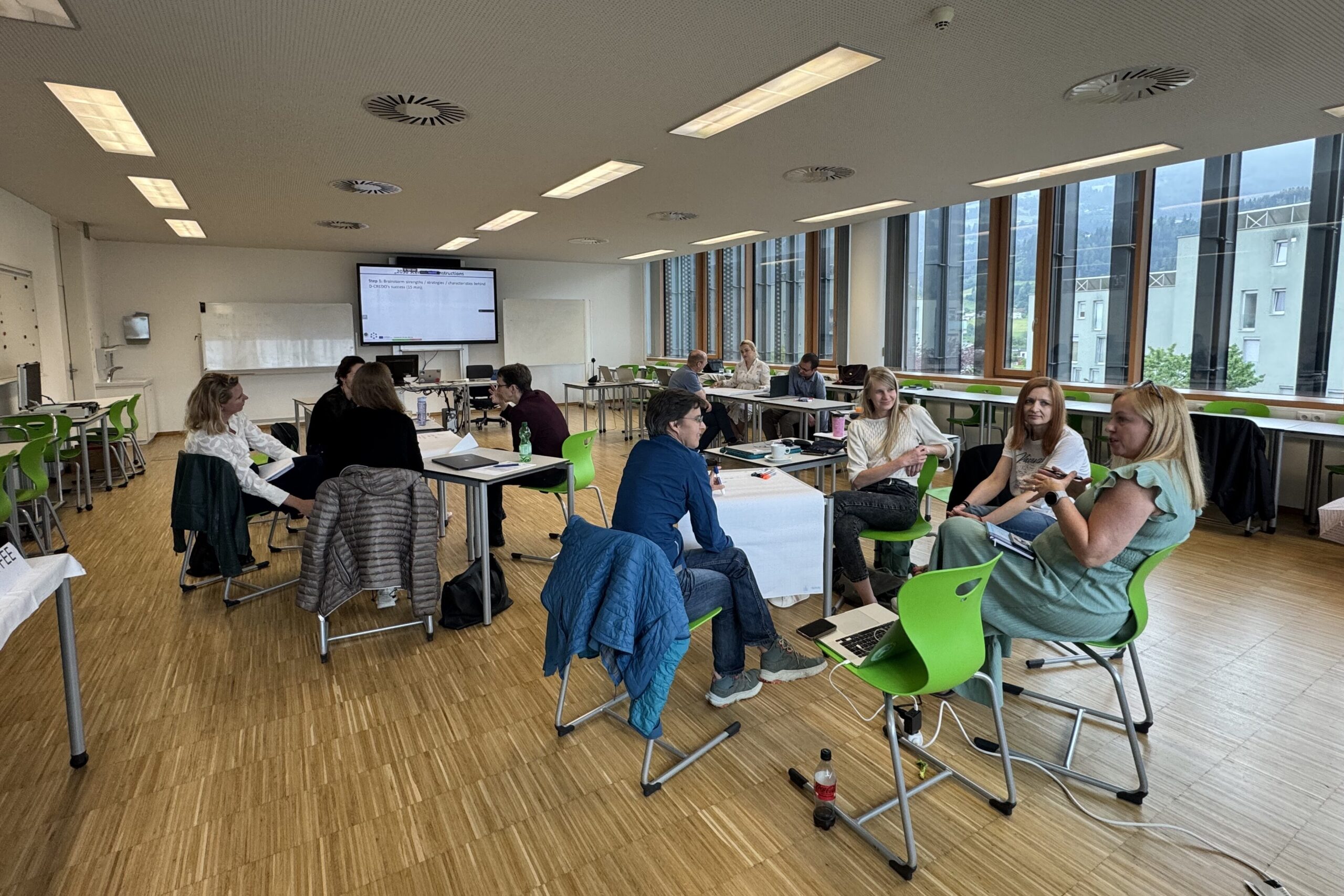
As D-CREDO enters its final year, sustainability has become an increasingly important topic. During a dedicated workshop, participants were asked to imagine the year 2030 and reflect on why D-CREDO might still be considered a success. The exercise encouraged groups to think beyond project deliverables and focus on long-term impact. Several ideas emerged:
- Increasing visibility through professional networks and social media.
- Creating reusable promotional and implementation materials.
- Publishing research that extends the project’s influence.
- Strengthening engagement with associated partners.
The discussion reinforced an important lesson from previous project meetings: sustainability is not only about maintaining resources, but also about building networks, ownership, and continued engagement.
Looking Ahead
The meeting in Hall in Tirol marked an important transition point for D-CREDO. Much of the development work is now nearing completion, while implementation, evaluation, and dissemination activities are gaining momentum.
Over the next year, pilot studies, best practice guidelines, research collaborations, and sustainability planning will shape the project’s final phase. We now look forward to our final face-to-face meeting in Rotterdam in 2027 and to sharing the next chapter of the D-CREDO journey.
Stay connected with D-CREDO and follow our journey on LinkedIn for more updates, insights, and stories.