One of the highlights of the third D-CREDO face-to-face consortium meeting in Hall in Tirol was a dedicated session exploring the role of nursing within digital clinical reasoning education. As healthcare becomes increasingly digital, it is essential that educational innovations reflect the perspectives and realities of all health professions – not only medicine, but also nursing and the many other professions involved in patient care.
The session was introduced and moderated by Prof. Dr. Daniela Deufert, whose expertise in nursing science and digital health provided the ideal starting point for an engaging interdisciplinary discussion. She emphasised that the success of D-CREDO depends on developing educational approaches that are relevant across professional boundaries and that acknowledge the unique contributions of nursing to clinical reasoning. If you are interested in that, read more in our Interview with Daniela on Nursing and Clinical Reasoning in the D-CREDO project.
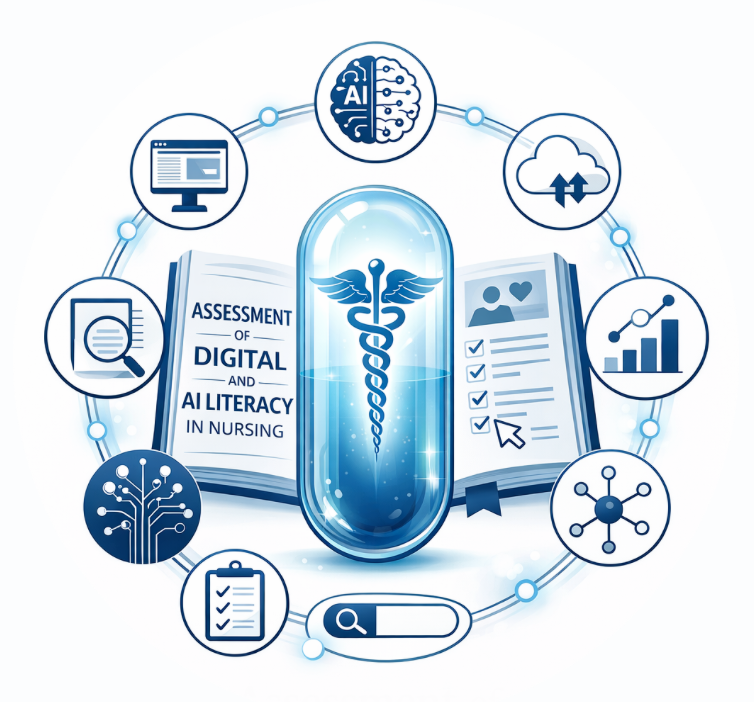
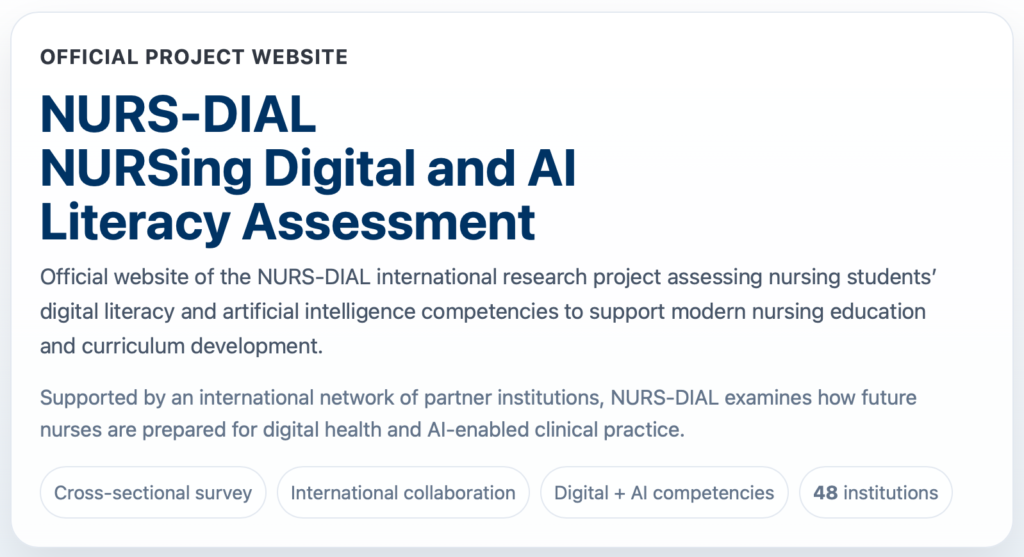
The first invited presentation by Dr. Ines Simbrig from the Department of Nursing Science and Gerontology at UMIT TIROL introduced NURS-DIAL (NURsing Digital and AI Literacy Assessment), an international initiative assessing digital literacy and artificial intelligence competencies among nursing students. The presentation highlighted that digital competence encompasses much more than technical skills. NURS-DIAL examines several dimensions that are increasingly important for modern nursing practice, including information literacy, digital wellbeing, mobile health (mHealth) literacy, and AI literacy. Together, these competencies enable future nurses not only to use digital technologies effectively but also to evaluate them critically and ethically.
Preliminary findings from the Austrian cohort demonstrated encouraging levels of digital competence among nursing students while also revealing differences related to age and educational level. These findings underline the importance of systematically integrating digital and AI-related competencies into nursing education rather than assuming students naturally acquire these skills through everyday technology use. Particularly interesting for the D-CREDO consortium was the discussion of which AI-related topics students consider most relevant for their education. High priorities included the critical evaluation of AI-generated outputs, privacy and security of patient data, ethical aspects of AI, and practical knowledge of AI applications in healthcare. These priorities closely align with D-CREDO’s ambition to promote responsible and evidence-based use of digital technologies in clinical reasoning.
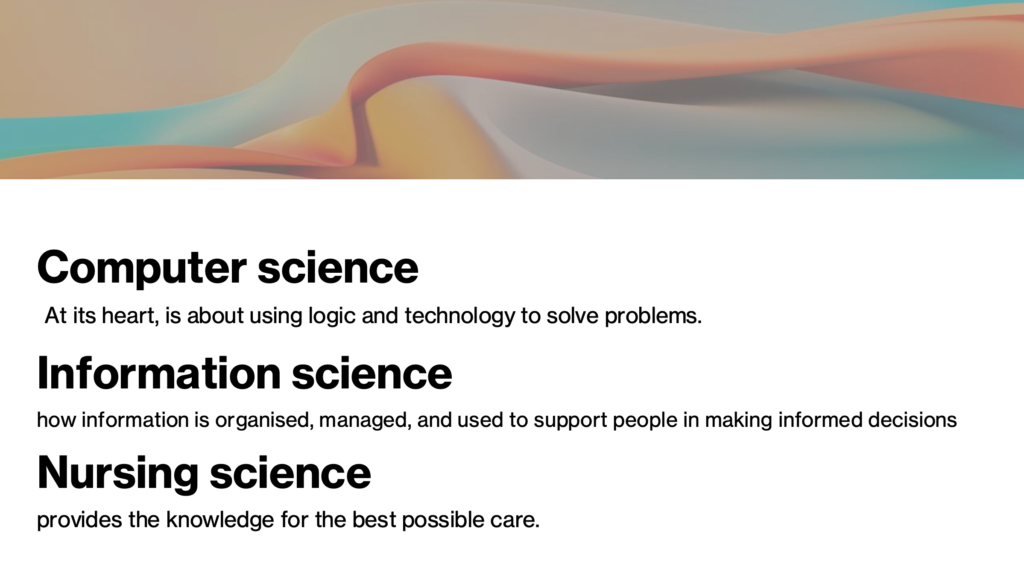
Building on the educational perspective, the second presentation by Dr. Johannes Hilbe explored the broader field of nursing informatics and its growing importance for healthcare practice. The presentation demonstrated how nursing informatics brings together nursing science, information science and computer science to transform clinical data into meaningful knowledge that supports high-quality patient care and clinical decision-making.
We were introduced to the fundamental principle that lies at the heart of nursing informatics: converting raw clinical data into actionable information and ultimately into knowledge that supports appropriate care decisions. This process closely mirrors the concept of clinical reasoning that forms the foundation of the D-CREDO project. The presentation then illustrated how advances in miniaturised sensors, wearable technologies and continuous health monitoring are fundamentally changing the healthcare landscape. Information that was once only available during occasional hospital visits can now be collected continuously through smart watches, mobile devices and other connected technologies. For healthcare professionals, this creates new opportunities but also new responsibilities, as they must be able to interpret growing volumes of digital information and integrate them into patient-centred clinical reasoning.
Finally, attention turned to some of the major challenges accompanying digital transformation. The increasing availability of health data raises important questions regarding privacy, cybersecurity and equitable access to AI-supported healthcare. These ethical and societal considerations are essential components of digital clinical reasoning education and resonate strongly with D-CREDO’s objectives.

After the two presentations, we went around the room and asked everyone to share their thoughts on the role of nursing in D-CREDO. One of the main takeaways was that nursing education and nursing roles differ quite a bit between countries. This means that digital clinical reasoning education also needs to be flexible enough to reflect these different contexts and competencies. The upcoming pilot activities will help us better understand these needs.
Several partners also pointed out that digital tools need to be seen as something that supports everyday work, not as an extra burden. Communicating their practical value and building on existing resources, instead of creating everything from scratch, will be important for successful implementation. Another topic that came up was the need to involve students more directly in the project—not only nursing students, but learners from all health professions. Participants also reflected on the connections between nursing and medical education and how D-CREDO can support both profession-specific and interprofessional learning. Finally, there was broad agreement that nursing educators also need support and resources to integrate digital competencies into their curricula.
For D-CREDO, this session represented an important step towards ensuring that nursing perspectives are embedded throughout the project. By bringing together expertise in nursing informatics, digital literacy and AI education, the consortium reinforced its commitment to developing digital clinical reasoning education that reflects the realities of modern healthcare and supports the diverse professionals who deliver it.
Stay connected with D-CREDO and follow our journey on LinkedIn for more updates, insights, and stories.