As part of our ongoing exploration of clinical reasoning across health professions, we spoke with Prof. Dr. Daniela Deufert, an experienced nurse, educator, and contributor to D-CREDO. Her perspective highlights the essential role nursing plays in shaping patient-centred clinical reasoning – an aspect that becomes increasingly important as healthcare evolves and integrates digital tools. In this interview, Daniela reflects on the distinctive nature of nursing reasoning, its value within interprofessional collaboration, and the opportunities digital education offers for the next generation of nurses.
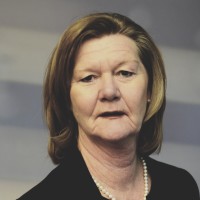
Daniela Deufert, PhD, is an associate professor at the Department of Nursing Science and Gerontology at UMIT TIROL. She is head of the Division for Nursing and Health Education at the Institute for Nursing Science and course coordinator of the bachelor’s programme in Nursing Science.
Daniela, from your perspective, how does clinical reasoning in nursing differ from clinical reasoning in medicine?
I think medical clinical reasoning is all about diagnosing and treating diseases. On the other hand, nursing clinical reasoning is more about the needs of the patient, how they react to treatments, and their quality of life. Medicine is all about dealing with the actual illness and treatment, while nursing is more about helping people cope with their illness and support them in their day-to-day lives
What unique contributions do nurses bring to the broader concept of clinical reasoning?
Nurses have a special way of thinking that focuses on the whole person and on the needs of the patient. This is very different from the way medicine is usually practised, which is all about diagnosis. They are there all the time and can see if patients are getting better or worse. They also see how patients react to being sick, the treatment they are getting, and being in the hospital. They consider physical, emotional, social, and cultural aspects when making decisions and try to follow what their patients want and what is important to them. This helps nurses to work well with other professionals and make sure that care is meaningful and sustainable in everyday life.
Why is it important that nursing is explicitly included in the D-CREDO project?
Nursing must be included because it represents a different but important part of clinical reasoning. If we exclude them, we’re missing out on the valuable insights nurses gain by regularly interacting with patients and their knowledge of how patients respond to care and their daily needs. By including nursing, the project covers all aspects of reasoning across different professions, improves understanding between professionals, and ultimately improves patient safety and the quality of care.
What would you like to see as the next steps in strengthening the nursing perspective in D-CREDO?
Involving nurses at different levels of practice and education would ensure that outputs reflect real-world complexity.
How do you imagine digital clinical reasoning education will impact the daily practice of future nurses?
Digital education would let nurses practise making decisions through simulations and case studies in a safe environment. This would help them to feel more confident and learn to think more clearly. It might also help them to spot small changes in patients more quickly and respond better in difficult situations.
If you could give one piece of advice to nursing educators trying to bring digital tools into their teaching, what would it be?
I would say that digital tools should always be used to improve – not replace – the human and relational parts of nursing education. Technology can help with clinical reasoning, but it must be used with reflection, conversation, and in real medical situations. Combined with teaching and practice, digital tools can help nurses learn without losing the bigger picture of what nursing is.
Thank you, Daniela, for sharing your experiences!
Daniela’s insights underscore why nursing perspectives are indispensable to developing a comprehensive and inclusive framework for digital clinical reasoning education. As D-CREDO continues to expand its activities in the coming year, integrating expertise from diverse health professions will remain central to our work. We thank Daniela for sharing her experience and vision, and we look forward to further strengthening the nursing voice within the project.
Stay connected with D-CREDO and follow our journey on LinkedIn for more updates, insights, and stories.